Cannabis Without THC: The Discovery That Could Transform Chronic Pain Treatment
- May 12
- 3 min read

No THC, no "high" effect, but with the potential to revolutionize pain treatment. Scientists have discovered compounds in cannabis that could change the future of analgesics.
The search for safer alternatives to opioids has become urgent, especially given the risks of dependence and serious side effects associated with these medications. In this context, medicinal cannabis is gaining prominence, but not only for its best-known compounds, such as THC. This study focuses on terpenes, natural substances in the plant that may also have important effects on the body.
Terpenes are responsible for the aroma and flavor of cannabis, but recent research shows that they can also interact with the nervous system. Previous studies had already indicated that some isolated terpenes can mimic certain effects of cannabis and relieve neuropathic pain, especially that caused by treatments such as chemotherapy.
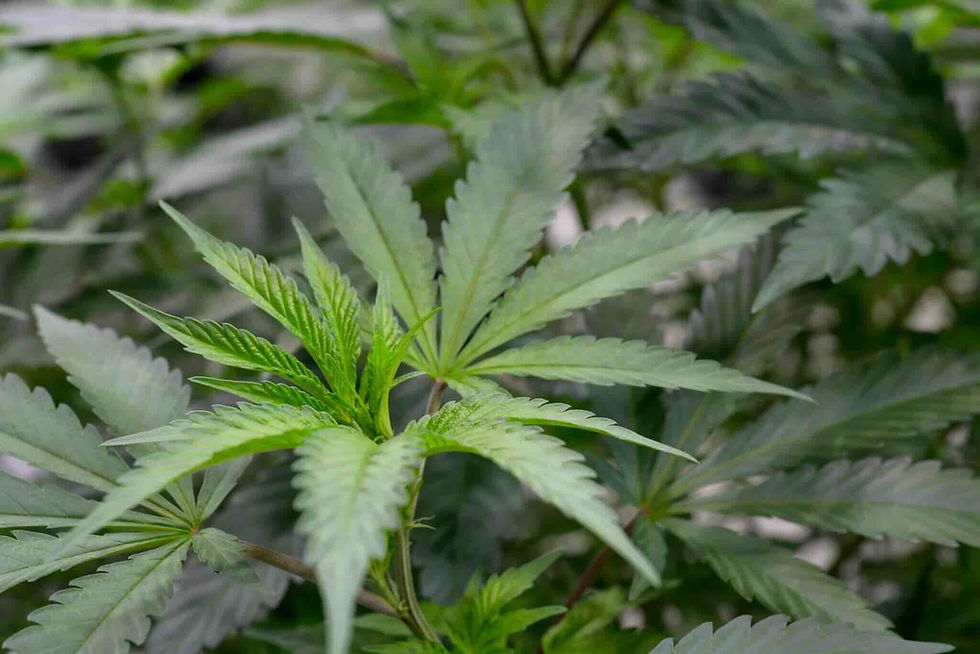
Cannabis terpenes may offer a new approach to treating post-surgical pain and fibromyalgia. Credit: Kris Hanning, Office of Communication, Department of Health Sciences, University of Alberta.
However, there is an important difference between what is studied in the laboratory and what people actually consume. In practice, terpenes are not used in isolation, but rather in complex mixtures present in plant extracts. Therefore, researchers wanted to understand if these analgesic effects also occur when terpenes are used in this more realistic way.
To do this, they extracted mixtures of terpenes from different varieties of Cannabis and tested these compounds on mice. The animals were evaluated in two main aspects: typical behaviors associated with the action of Cannabis in the body and the ability of these mixtures to alleviate a specific type of pain, chemotherapy-induced peripheral neuropathy, which is known to be difficult to treat.

The results showed that, despite each mixture having a unique composition, all produced similar effects on the body, such as changes in motor activity and body temperature. More importantly, all were effective in reducing neuropathic pain. This effect was more intense in males than in females, indicating that biological factors may influence the response to treatment.
Investigating the mechanism behind this pain relief, scientists discovered that it is linked to the activation of a specific receptor in the nervous system, related to adenosine. When this receptor was blocked, the analgesic effect disappeared, confirming its central role in this process.

John Streicher, PhD, lead researcher of the study. Credit: Noelle Haro-Gomez, Office of Communication, University of Arizona College of Health Sciences.
These findings are relevant because they show that THC-free cannabis compounds can offer real therapeutic benefits without the psychoactive effects associated with the plant. Furthermore, they reinforce the idea that natural mixtures, closer to what is consumed in real life, can also be effective.
In the future, these findings may pave the way for the development of new treatments for chronic pain, potentially safer than opioids. Further human studies are still needed, but the results already indicate a promising direction for medicine.
READ MORE:
Terpene blends from Cannabis sativa are cannabimimetic and antinociceptive in a mouse chronic neuropathic pain model via activation of adenosine A2a receptors
Abigail M. Schwarz, Caleb A. Seekins, Omar El-Sissi, and John M. Streicher
Neuroscience Letters. Volume 854, 1 April 2025, 138205
DOI: 10.1016/j.neulet.2025.138205
Abstract:
An increase in the use of medicinal Cannabis for pain management has spurred research into the understudied bioactive compounds in Cannabis, such as terpenes. In our previous work, we showed that isolated and purified terpenes were cannabimimetic and also relieved chemotherapy-induced peripheral neuropathy (CIPN) pain via activation of Adenosine A2a Receptors (A2aR) in the spinal cord. However, terpenes are most often consumed by the public as complex extracts and mixtures, not purified individual terpenes, and whether this cannabimimetic and antinociceptive activity holds true in terpene extracts and blends is not clear. In this study, we thus extracted terpene blends from three distinct Cannabis chemovars and assessed these blends in male and female CD-1 mice for their cannabimimetic activity in the tetrad assay and pain-relieving properties in a CIPN model. Each terpene blend was unique in the relative amounts of different terpenes extracted. Though each blend was unique, each similarly elicited cannabimimetic behaviors of catalepsy, hyperlocomotion, and hypothermia, without tail flick analgesia. All three terpene blends effectively relieved CIPN, though the antinociception was more robust in male than in female mice. This antinociception was recapitulated by purified Myrcene but not D-Limonene. The A2aR antagonist istradefylline
blocked the pain-relieving effects of all three terpene blends, suggesting that the terpene blends act on A2aR to relieve CIPN pain. Together, these findings suggest that terpene blends have similar pharmacological effects as purified single terpenes, and that observations made with single terpenes may be applicable to the complex terpene mixtures commonly consumed by the public.


Comments