Controlled Chaos: The Secret to Brain Cancer Resistance May Lie in The Cells' Ability to Change Identity

What if the seemingly chaotic behavior of glioblastoma followed predictable biological rules? By using artificial intelligence to analyze over a million cells, researchers have uncovered mechanisms that govern how cells within this brain tumor shift their identity. The study identified a protein called MYT1L, which helps prevent these cells from adopting more aggressive traits, a finding that opens new avenues for investigating how cancer develops resistance to treatment.
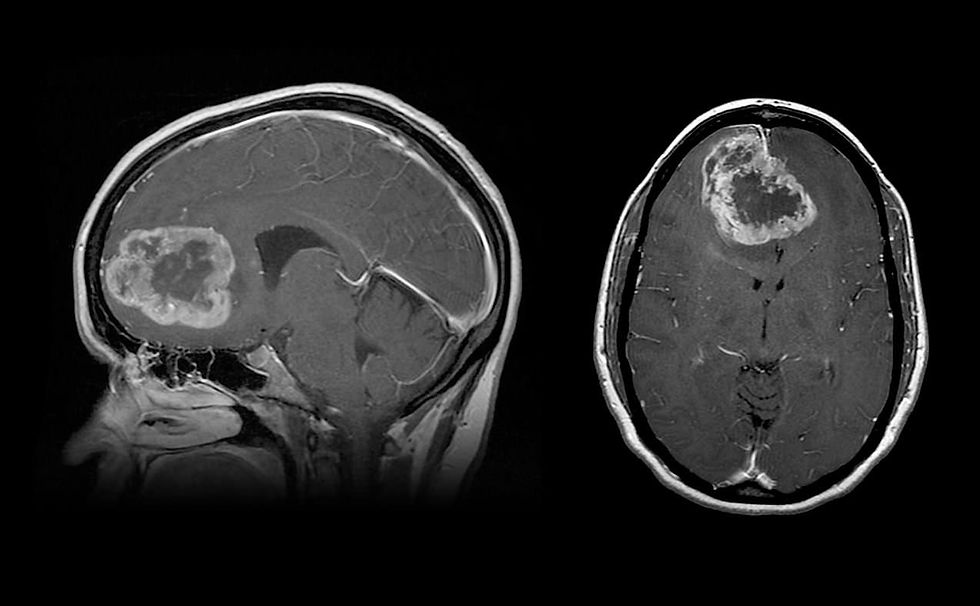
Glioblastoma is one of the most aggressive and difficult-to-treat brain tumors. Even when treatment successfully controls part of the tumor, some cells survive and can begin to regrow. A key reason for this resistance is the ability of these cells to alter their characteristics and take on different behaviors, without necessarily undergoing new changes to their DNA.
But do these shifts occur randomly, or do they follow organized biological instructions? A new study explored this question and discovered that, beneath the tumor’s apparent disorder, there lies a network of mechanisms that guides these cellular transformations.
To understand how these changes unfold, the researchers developed an artificial intelligence tool called scDORI. It employs advanced machine learning methods, a branch of artificial intelligence designed to identify patterns within vast datasets. The scientists analyzed more than a million cells and cell nuclei taken from patient tumors.
Instead of looking only at the tumor as a whole, they examined individual cells, investigating which genes were active and which regions of the DNA helped control this activity. These regulatory regions, known as "enhancers," function like switches or accelerators: they help boost the activity of specific genes, even when they are located far away from them along the DNA strand. By combining this information, the tool was able to reconstruct control networks that help explain why tumor cells adopt certain behaviors.
Following this computational analysis, the researchers conducted experiments to verify whether the identified mechanisms truly influenced cell behavior. To do this, they used laboratory models developed from patient tumors and systematically altered the activity of specific genes, observing the consequences of these changes.
The results showed that glioblastoma cells do not transform in a completely chaotic or disordered manner. There are mechanisms that promote the adoption of new traits, as well as others that prevent certain changes from occurring.
This combination creates a sort of hierarchy of cellular states, allowing the tumor to follow different paths of transformation, including some that are not part of normal brain development.

One of the most significant discoveries involved the MYT1L gene, which produces a protein capable of maintaining specific cellular characteristics. The researchers observed that this protein acts as a sort of guardian of cellular identity: it blocks genes responsible for driving cells toward other states. In this way, it helps keep certain tumor cells in a state similar to that of neurons, limiting their ability to alter their behavior.
The experiments also showed that MYT1L continued to restrict these transformations even during standard treatment. Furthermore, in animal models, its activity reduced both tumor growth and the tumor's capacity for invasion. When the researchers reduced or eliminated the activity of this gene, the cells regained a greater capacity for transformation and began to exhibit more aggressive characteristics.

The results reveal that the apparent stability of certain tumor cells does not mean they have lost the capacity to change. In fact, this stability may depend on mechanisms that must remain active to prevent further transformations.
This finding opens up an important possibility for the development of treatments: rather than simply encouraging tumor cells to adopt more differentiated characteristics, it might be more effective to block the mechanisms that allow them to escape this state and acquire more aggressive behaviors.
Although further studies are still needed to evaluate the application of this strategy in patients, the research offers a new way to understand how glioblastoma adapts, resists treatment, and continues to evolve.
READ MORE:
Decoding the regulatory programs governing glioblastoma plasticity
Manu Saraswat, Laura Rueda-Gensini, Elisa Heinzelmann, Tannia Gracia, Fani Memi, Grant de Jong, Jannes Straub, Cedar Schloo, Dirk C. Hoffmann, Erik Jung, Tim Kindinger, Louis Masclef, Bettina Weigel, Bryce Lim, Faustus Tuschmann, Sophie Weil, Oliver Gould, Richard Mair, Katharina Mikulik, Martin Rohbeck, Wolfgang Wick, Frank Winkler, Omer Ali Bayraktar, Oliver Stegle, and Moritz Mall
Nature. Nov 3, 2026
DOI: 10.1038/s41586-026-11177-0
Abstract:
Glioblastoma is incurable and resistant to therapy despite genomic stability under treatment1,2,3,4,5,6,7,8, suggesting that non-genetic cellular plasticity is a central driver of progression. Whether such plasticity reflects stochastic state switching or is governed by predictable gene regulation has remained unclear9,10,11,12,13. Here we introduce scDORI (single-cell deep multi-omic regulatory inference)—a deep-learning framework that infers enhancer-driven gene-regulatory networks at single-cell resolution—and apply it to single-nucleus multiome profiles of more than one million cells from primary glioblastomas. Integrating computational inference with systematic perturbation screens across patient-derived models, we show that a structured regulatory program with an asymmetric interplay of activators and repressors governs cellular plasticity in glioblastoma. The resulting transition landscape is hierarchical and predictable, but permits cross-lineage trajectories that are absent from normal neurodevelopment. Within this landscape, low-plasticity states such as the neuronal-like state are not stable differentiation end points but actively maintained configurations, stabilized by a network of safeguard repressors that silence alternative fates. We identify MYT1L as the dominant member of this network, and show that it binds to and represses master regulators of every alternative state to consolidate neuronal-like identity. MYT1L restricted plasticity even under standard-of-care therapy and suppressed tumour growth and invasion in vivo. Conversely, loss of MYT1L reactivated plasticity and accelerated malignant features, indicating that low-plasticity identity requires continuous repression. These findings reframe malignant cell state stability as a balance between activation and continuous repression, and nominate safeguard repressors as candidate therapeutic targets that are distinct from differentiation-inducing activators, with potential relevance across cancers in which phenotypic switching drives therapy resistance.


Comments