Trojan Horse: Scientists Use Sugar To Bypass Brain's Defenses and Attack Aggressive Cancer
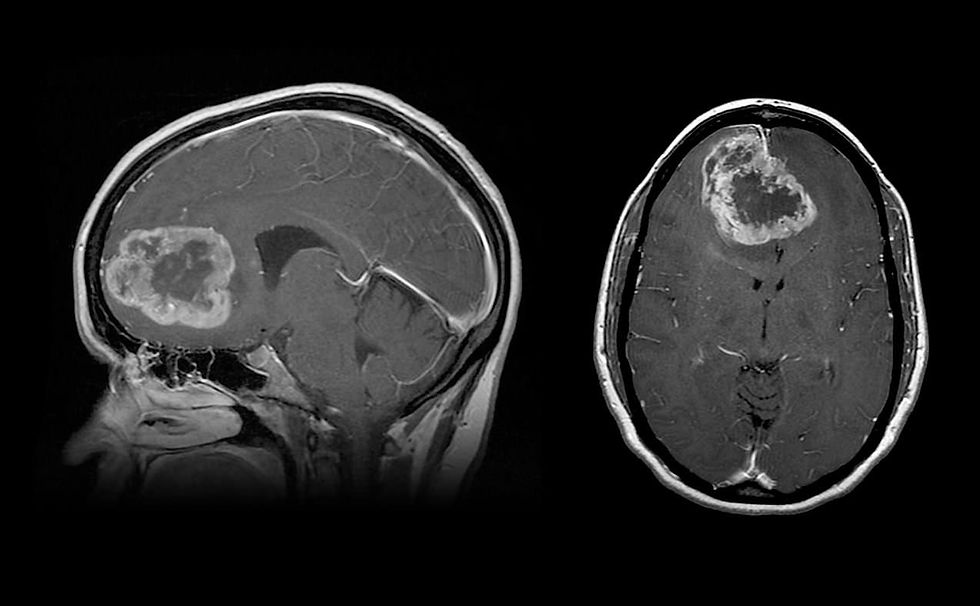
What if a simple sugar could trick the brain's protective barrier and deliver a treatment directly to the cancer? Scientists have developed an innovative technology that crosses this natural barrier, delivers genetic instructions to tumor cells, and has successfully significantly increased survival rates in glioblastoma models. This discovery could transform the future of treatment for brain diseases.
Glioblastoma is considered the most aggressive type of brain cancer. Even with surgery, radiation, and chemotherapy, most patients experience a recurrence of the disease shortly thereafter. One of the major obstacles to developing more effective treatments is a natural bodily structure known as the blood-brain barrier. It acts as a sophisticated protective system for the brain, preventing potentially dangerous substances in the bloodstream from reaching brain tissue.
The problem is that this same barrier also blocks many drugs that could fight tumors, making it extremely difficult to deliver treatments to where they are truly needed.
In recent years, a technology known as messenger RNA (mRNA) therapy has gained significant prominence, particularly following the development of vaccines against the coronavirus pandemic. Instead of directly administering a protein or a drug, this strategy sends a sort of "instruction manual" to the cells, enabling them to produce disease-fighting proteins themselves.
In the case of glioblastoma, researchers envisioned delivering instructions to tumor cells to restore proteins that normally inhibit cancer growth. The major challenge remained crossing the barrier that protects the brain.

To solve this problem, scientists came up with an extremely creative idea: leveraging the brain's own need for sugar. The brain uses vast amounts of glucose as fuel, and special proteins located in the blood-brain barrier, known as glucose transporters, transport it from the blood into brain tissue.
Researchers discovered that both these proteins and glioblastoma cells feature high levels of one of these transporters. Consequently, they decided to coat lipid nanoparticles, tiny fat spheres carrying messenger RNA, with mannose molecules, a sugar very similar to glucose.
The hope was that the brain would "mistake" these nanoparticles for natural nutrients, allowing them to cross the barrier and subsequently enter the tumor cells directly.
To test this strategy, the team developed nanoparticles with high concentrations of mannose on their surface, loaded with the messenger RNA responsible for producing a protein called PTEN. This protein acts as a crucial tumor suppressor but is often absent or altered in many cases of glioblastoma.
Next, the researchers administered these nanoparticles into the bloodstream of healthy mice to verify whether they could indeed cross the blood-brain barrier. They then repeated the experiments on mice that had received human glioblastoma cells implanted directly into their brains, creating a model that closely replicates the disease as seen in patients.

The results were impressive. Mannose-coated nanoparticles reached the brain in quantities nearly ten times greater than conventional nanoparticles. More importantly, they preferentially accumulated within the tumor, demonstrating an ability to specifically recognize cancer cells.
Once inside these cells, the messenger RNA was utilized to produce the PTEN protein, which helps inhibit cancer growth, once again. Consequently, treated tumors were approximately six times smaller than those in animals that did not receive the therapy. Furthermore, the mice's median survival increased from 33 to 49 days, a significant gain for this experimental glioblastoma model.
In addition to assessing the effect on the tumor, the researchers also carefully studied how the nanoparticles behaved within the brain. They observed that the material could reach various types of brain cells without causing significant damage, indicating that the platform offers good distribution capabilities and a promising safety profile.

Another important aspect was that the entire therapy was administered via a simple intravenous injection, without the need to open the skull, perform invasive procedures, or use complex equipment to temporarily breach the blood-brain barrier, as other experimental strategies currently require.
Although these results have so far been obtained only in animals, and much more research is needed before the technology can be used in patients, the work represents an extremely promising breakthrough. For the first time, researchers have created a platform that uses a simple sugar to cross the brain's primary protective barrier while simultaneously targeting the treatment specifically to cancer cells.

If future studies confirm these results in humans, this approach could pave the way not only for new therapies against glioblastoma but also for the treatment of various other brain diseases that are currently limited precisely by the difficulty of delivering drugs to the brain.
READ MORE:
Single-ligand dual-targeting lipid nanoparticles for therapeutic mRNA delivery to glioblastoma across the blood-brain barrier
Yoon Tae Goo, Vincent N. Cataldi, Vladislav Grigoriev, Neera Yadav, Tetiana Korzun, Chao Wang, Adam W.G. Alani, Olena R. Taratula, and Oleh Taratula
Journal of Controlled Release. Volume 396, 10 August 2026, 115107
DOI: 10.1016/j.jconrel.2026.115107
Abstract:
Lipid nanoparticle (LNP)-mediated mRNA delivery to brain tumors is limited by the blood-brain barrier (BBB) and lack of active tumor targeting. Glucose transporter 1 (GLUT1), abundant on brain endothelium and overexpressed in glioblastoma, offers a single target for both BBB transcytosis and preferential tumor uptake. However, effective GLUT1 engagement requires high ligand densities on LNPs to compete with blood glucose, a threshold unattainable through conventional PEG-lipid functionalization. Furthermore, incorporating hydrophilic sugar ligands (e.g., glucose, mannose) can disrupt LNP architecture and mRNA encapsulation. Here, mannose-cholesterol LNPs (MC_LNPs) are developed to target GLUT1 and overcome these challenges. Mannose-cholesterol conjugation achieves ∼30 mol% surface ligand density, and incorporating positively charged DC-cholesterol restores >90% mRNA encapsulation. In healthy mice, MC_LNPs achieve 9.9-fold greater brain accumulation than non-targeted formulations, confirming BBB penetration. Functional delivery is validated using Cre mRNA in Ai14 reporter mice, revealing expression in neurons and astrocytes. In orthotopic glioblastoma models, phosphatase and tensin homolog (PTEN) mRNA-loaded MC_LNPs exhibit preferential tumor accumulation, restoring tumor suppression, reducing tumor burden 6-fold, and extending median survival from 33 to 49 days. MC-LNPs represent the first dual-targeted mRNA platform for brain tumors, establishing cholesterol-based functionalization as a strategy to achieve high ligand densities for efficient transporter/receptor targeting.


Comments