Small Blood Clots: A New Mechanism of Damage in Alzheimer's
This study shows that, in Alzheimer's disease, the link between a brain protein (beta-amyloid) and a blood protein (fibrinogen) causes more damage than either protein separately. This complex impairs connections between neurons, increases inflammation, and weakens the protection of cerebral blood vessels. Blocking this interaction may be a promising strategy for preventing early brain damage in the disease.
Alzheimer's disease is a progressive neurological condition that primarily affects memory and other cognitive functions. It develops from several processes that occur simultaneously in the brain, such as the accumulation of a protein called beta-amyloid, abnormal changes in another protein called tau, persistent inflammation of brain tissue, failures in the protection of brain blood vessels, and impaired communication between neurons. Over time, these factors lead to the death of neurons and the loss of mental abilities.
A lesser-known, but increasingly important, element is the role of blood vessels in Alzheimer's. The brain is protected by a structure called the blood-brain barrier, which acts as a filter and prevents harmful substances from the blood from entering brain tissue.
When this barrier is damaged, blood proteins are able to cross it. One of these proteins is fibrinogen, essential for blood clotting, but potentially harmful when it enters the brain.

Previous studies have shown that fibrinogen can bind to beta-amyloid, forming a stable complex. However, it was still unclear how this binding could directly affect synapses, which are the connections responsible for communication between neurons. Understanding this process is fundamental, as the loss of synapses occurs even before neuronal death and is strongly associated with memory loss.
To investigate this question, the researchers used organotypic cultures of the hippocampus, which are thin slices of brain tissue kept alive in the laboratory. The hippocampus is a region essential for memory.
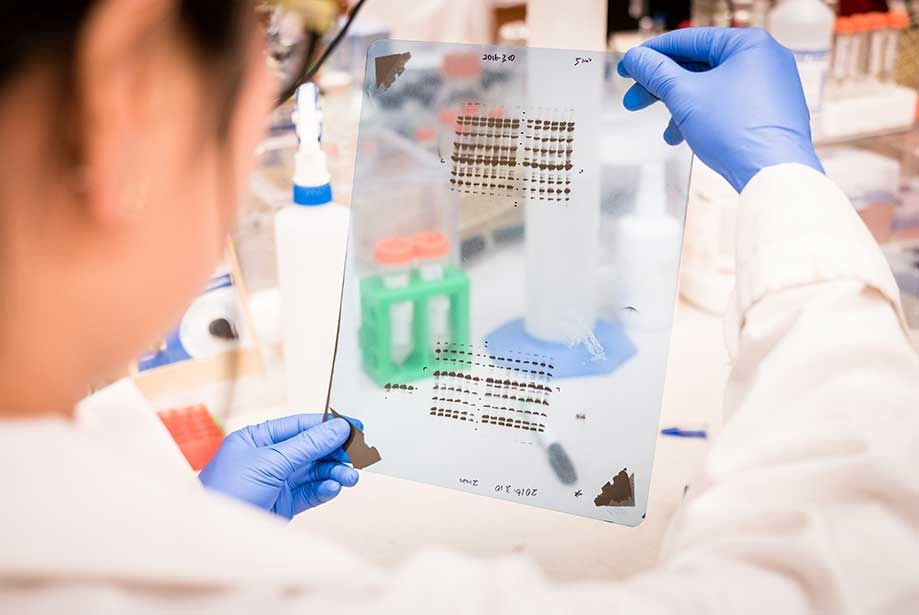
These cultures were separately exposed to beta-amyloid, fibrinogen, and the complex formed by the two proteins together. To assess damage to synapses, the Western blot technique was used, which allows the identification and quantification of specific proteins associated with neuronal connections.

Furthermore, the researchers conducted experiments on live mice. The proteins, isolated or in complex form, were injected directly into the cerebral ventricles, regions through which cerebrospinal fluid circulates.
After this procedure, the animals' brains were analyzed using two main techniques: Western blot, to measure changes in disease-related proteins, and immunofluorescence, which uses antibodies labeled with fluorescent substances to visualize inflammation, vascular damage, and synaptic loss under a microscope.
The results showed that small amounts of beta-amyloid or fibrinogen alone did not cause significant damage. However, when the two proteins were linked forming a complex, there was a marked loss of synapses, increased brain inflammation, changes in tau protein, and disruption of the blood-brain barrier.
These effects occurred even without the activation of a specific inflammatory receptor in microglia, indicating that the damage occurs through a pathway independent of this mechanism.

A key finding was that blocking the formation of the beta-amyloid-fibrinogen complex prevented synapse damage. This suggests that it is not just the presence of these proteins, but rather the interaction between them, that triggers particularly harmful effects on the brain.
Taken together, these results indicate that the complex formed by beta-amyloid and fibrinogen has a more damaging combined effect than each protein alone. This mechanism may help explain how vascular problems, inflammation, and protein alterations reinforce each other in the early stages of Alzheimer's disease, contributing to cognitive decline.
READ MORE:
Synergistic effects of the Aβ/fibrinogen complex on synaptotoxicity, neuroinflammation, and blood-brain barrier damage in Alzheimer’s disease models
Elisa Nicoloso Simões-Pires, Daniel Torrente, Pradeep Singh, Sidney Strickland, and Erin H. Norris
Alzheimer’s & Dementia. Volume21, Issue5 May 2025, e70119
DOI: 10.1002/alz.70119
Abstract:
Alzheimer's disease (AD) is characterized by amyloid-beta (Aβ), hyperphosphorylated tau, chronic neuroinflammation, blood-brain barrier (BBB) damage, and synaptic dysfunction, leading to neuronal loss and cognitive deficits. Vascular proteins, including fibrinogen, extravasate into the brain, further contributing to damage and inflammation. Fibrinogen's interaction with Aβ is well-established, but how this interaction contributes to synaptic dysfunction in AD is unknown. Organotypic hippocampal cultures (OHC) were exposed to Aβ42 oligomers, fibrinogen, or Aβ42/fibrinogen complexes. Synaptotoxicity was analyzed by Western blot. Aβ42 oligomers, fibrinogen, or their complexes were intracerebroventricularly injected into mice. Histopathological AD markers, synaptotoxicity, neuroinflammation, and vascular markers were observed by Western blot and immunofluorescence. Aβ42/fibrinogen complexes led to synaptic loss, tau181 phosphorylation, neuroinflammation, and BBB disruption, independent of Mac1/CD11b receptor signaling. Blocking Aβ42/fibrinogen complex formation prevented synaptotoxicity. These findings indicate that the Aβ42/fibrinogen complex has a synergistic impact on hippocampal synaptotoxicity and neuroinflammation.


Comments