What Does Your Gut Have To Do With Alzheimer's? The Answer May Surprise You

What if Alzheimer's didn't just start in the brain, but was the result of a much broader chain of events within the body? New scientific research has just revealed surprising clues about how small flaws within cells can trigger a domino effect capable of leading to brain degeneration.
Science is increasingly showing that diseases like Alzheimer's and other dementias are not caused solely by genetic factors, but also by processes that occur within cells, and even outside the brain. One of the main "villains" in these diseases is a protein called tau, which, when it accumulates abnormally, can damage neurons and lead to memory loss and other cognitive dysfunctions.
Although we already know that this protein is involved in these diseases, it is still not entirely clear why it begins to accumulate harmfully. Interestingly, in most cases, this does not happen because of genetic mutations, but because of factors in the cellular environment, that is, things that influence the functioning of cells on a daily basis.

To investigate this further, scientists used a rather advanced approach. They created human neurons in the laboratory from stem cells, cells that can transform into different cell types.
These neurons carried a specific mutation associated with a hereditary form of dementia. Thus, the researchers were able to study the problem directly in human cells, making the results closer to reality than studies done only on animals.
After that, the scientists applied a technique called large-scale gene editing, which allows them to "turn on and off" thousands of genes to see which ones influence the accumulation of the tau protein. It's like testing each piece of a machine to find out which ones are causing defects. To track the effects, they used special antibodies capable of identifying different forms of the tau protein within the cells.
With this method, the researchers identified several cellular processes that control the accumulation of the protein. One of the most important findings was a cellular system responsible for "marking" defective proteins to be destroyed. When this system works well, it helps prevent the accumulation of tau. When it fails, the protein can accumulate and form toxic aggregates.
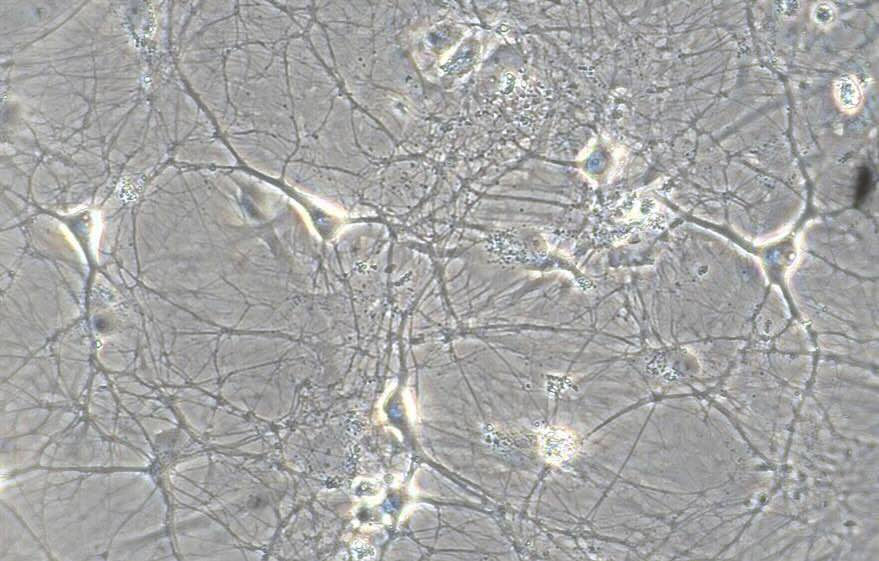
Neurons in Culture
Another interesting point was the discovery that cellular stress, especially oxidative stress, which occurs when there is an excess of reactive molecules in the body, can lead to the formation of abnormal fragments of the tau protein. These fragments can leave the cells and influence others, accelerating the disease process.
Furthermore, the researchers observed that problems in the mitochondria, the "power plants" of the cells, also contribute to this process, altering how the tau protein is processed and increasing its tendency to accumulate in a harmful way.

Taken together, this study shows that the accumulation of tau protein is controlled by a complex network of cellular processes. This opens new possibilities for the development of treatments, as there are now new potential targets, such as cellular cleaning systems and stress response mechanisms, that can be explored to prevent or slow the progression of these diseases.
READ MORE:
CRISPR screens in iPSC-derived neurons reveal principles of tau proteostasis
Avi J. Samelson, Nabeela Ariqat, Justin McKetney, Gita Rohanitazangi, Celeste Parra Bravo, Rudra S. Bose, Kyle J. Travaglini, Victor L. Lam, Darrin Goodness, Thomas Ta, Gary Dixon, Emily Marzette, Julianne Jin, Ruilin Tian, Eric Tse, Romany Abskharon, Henry S. Pan, Emma C. Carroll, Rosalie E. Lawrence, Jason E. Gestwicki, Jessica E. Rexach, David S. Eisenberg, Nicholas M. Kanaan, Daniel R. Southworth, John D. Gross, Li Gan, Danielle L. Swaney, and Martin Kampmann
Cell. Volume 189, Issue 5P1517-1534.E19, March 05, 2026DOI: 10.1016/j.cell.2025.12.038
Abstract:
Aggregation of the protein tau defines tauopathies, the most common age-related neurodegenerative diseases, which include Alzheimer’s disease and frontotemporal dementia. Specific neuronal subtypes are selectively vulnerable to tau aggregation, dysfunction, and death. However, molecular mechanisms underlying cell-type-selective vulnerability are unknown. To systematically uncover the cellular factors controlling the accumulation of tau aggregates in human neurons, we conducted a genome-wide CRISPRi screen in induced pluripotent stem cell (iPSC)-derived neurons. The screen uncovered both known and unexpected pathways, including UFMylation and GPI anchor biosynthesis, which control tau oligomer levels. We discovered that the E3 ubiquitin ligase CRL5SOCS4 controls tau levels in human neurons, ubiquitinates tau, and is correlated with resilience to tauopathies in human disease. Disruption of mitochondrial function promotes proteasomal misprocessing of tau, generating disease-relevant tau proteolytic fragments and changing tau aggregation in vitro. These results systematically reveal principles of tau proteostasis in human neurons and suggest potential therapeutic targets for tauopathies.


Comments