Why is Facial Recognition Different in Autism?
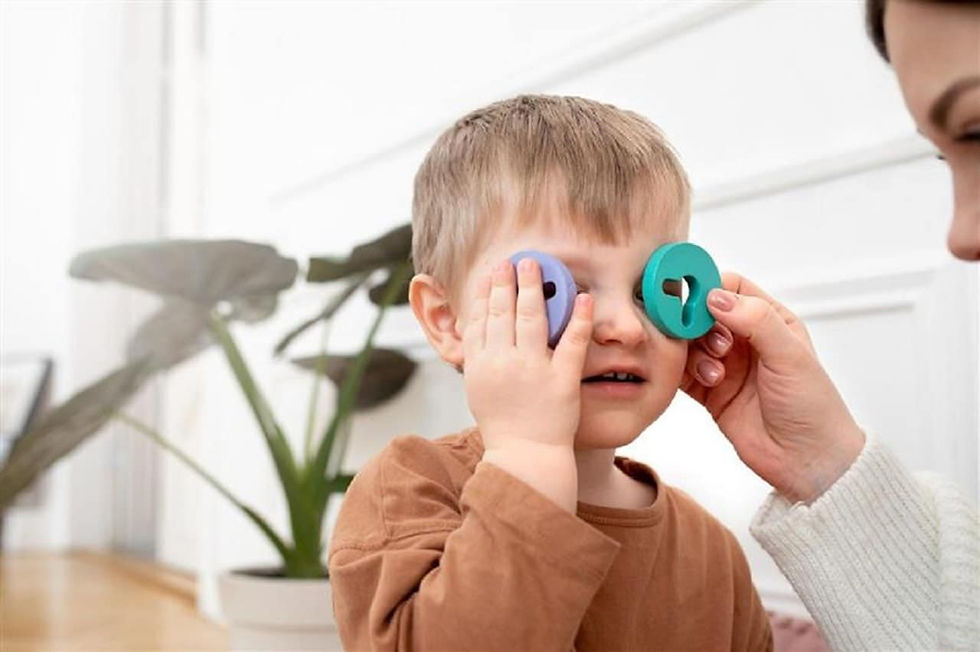
Your brain recognizes a face in a few moments, but this ability may function differently in autism. A new study reveals that autistic children process faces differently and that these differences appear early in brain development, providing important clues about how they perceive the world around them.
Recognizing a face seems like an automatic task for most people. In a few seconds, the brain identifies who is in front of us, interprets facial expressions, and gathers important information for communication. This ability is one of the foundations of social relationships and begins to develop in the first years of life.
However, scientists are still trying to understand why many autistic children perceive faces differently and how this influences their social interactions. A new study provides important clues about this process.
To investigate this question, researchers followed 399 children, both autistic and neurotypical, aged 6 to 11 years. During the experiment, they observed different images, including human faces, faces presented upside down, and photographs of houses.
Meanwhile, the brain's electrical activity was recorded using high-density electroencephalography (HEI), a completely painless examination that uses several small sensors positioned on the scalp. This technique allows monitoring, in fractions of a second, how the brain responds to different visual stimuli.

But the researchers went beyond simply observing which brain regions were activated. They used a computational technique capable of identifying extremely detailed patterns of brain activity.
Instead of simply asking if the brain reacted to a face, they analyzed how well the brain's response could differentiate a face from other types of images and even distinguish different identities. It's like comparing the sharpness of two photographs: the more distinct the brain responses, the more specialized the way the brain processes this information.
The results showed clear differences between the groups. In neurotypical children, the brain produced much more specific responses to faces than to other objects, indicating a strong specialization in recognizing faces and identifying different people. In autistic children, these neural representations were less distinct.
In other words, although their brains also responded to faces, this differentiation was less precise, suggesting a different way of organizing and processing this type of visual information.

Another important result emerged when researchers compared different age groups. In neurotypical children, the brain's ability to recognize and differentiate faces became increasingly refined between the ages of 6 and 11. It was as if the brain was progressively specializing in this task during development.
In autistic children, however, this evolution did not occur in the same way. The pattern of brain activity remained relatively stable over the years, indicating a different developmental trajectory.
These findings do not mean that autistic children are incapable of recognizing faces or understanding other people. The study actually shows that their brains use different strategies to perform this task.
Understanding these differences is fundamental to developing more effective interventions and creating learning and communication environments better adapted to the needs of each child. Furthermore, knowing how the brain processes social information from infancy can help scientists better understand the development of autism and create new forms of support for families.

Dr. James McPartland, lead researcher of the study. Credit: Yale School of Medicine
LEIA MAIS:
Decoding the temporal dynamics of face-specific neural representations in autism
Jason W. Griffin, Alan H. Gerber, Kaylee Litson, Susan Faja, Shafali Jeste, Natalia Kleinhans, Geraldine Dawson, Adam Naples, April R. Levin, Sara Jane Webb, Frederick Shic, Catherine Sugar, James Dziura, James C. McPartland and for the Autism Biomarkers Consortium for Clinical Trials
Nature Mental Health. 29 June 2026. 4, pages 1109–1121 (2026)
DOI: 10.1038/s44220-026-00672-y
Abstract:
Face perception is essential for social interaction, but its neural basis and development in autism remain unclear. Using multivariate pattern analysis on high-density electroencephalography data from a large pediatric case–control observational study (N = 399), we found that autistic children exhibited less distinct face- and identity-selective neural representations than neurotypical (NT) children. During specific stages of face processing, the neural representations for faces, inverted faces and houses were significantly more distinct in NT compared with autistic children. Across developmental age groups (6–7-, 8–9- and 10–11-year-olds), NT children showed increasing neural specialization across age such that face- and identity-selective neural representations became more distinct across age, a pattern not observed in autistic children. These findings provide insight into the neural processes underlying face perception differences in autism and underscore the importance of understanding developmental trajectories of face-selective neural representations.


Comments