🎗️Why Does Ketamine Act So Quickly Against Depression? The Immune System May Hold The Answer

What if the antidepressant action of ketamine and psychedelics also involved the immune system? A new study has found signs that these treatments may “reorganize” molecules involved in communication between the brain and the immune system. This discovery could help explain why some people experience a surprisingly rapid improvement in their depression.
Treatment-resistant depression remains one of psychiatry's major challenges. For some individuals, even various antidepressants fail to provide satisfactory symptom relief. It is against this backdrop that drugs like ketamine and psychedelic substances, such as psilocybin, have attracted scientific attention. Unlike traditional antidepressants, they can bring about relatively rapid changes, sometimes as early as the day after treatment.
Yet, an important question remains: what exactly happens in the brain to allow these drugs to produce such a rapid effect?
A new study investigated an increasingly compelling possibility: that these treatments also alter communication between the brain and the immune system.

To understand this, researchers combined different types of information. In one part of the study, they observed nerve cells grown in the laboratory from human cells and analyzed how they responded to ketamine, psilocybin, and two other related compounds.
In another stage, they analyzed samples of the fluid circulating around the brain and spinal cord of people who had received ketamine. They also examined blood samples to measure molecules involved in immune system signaling.
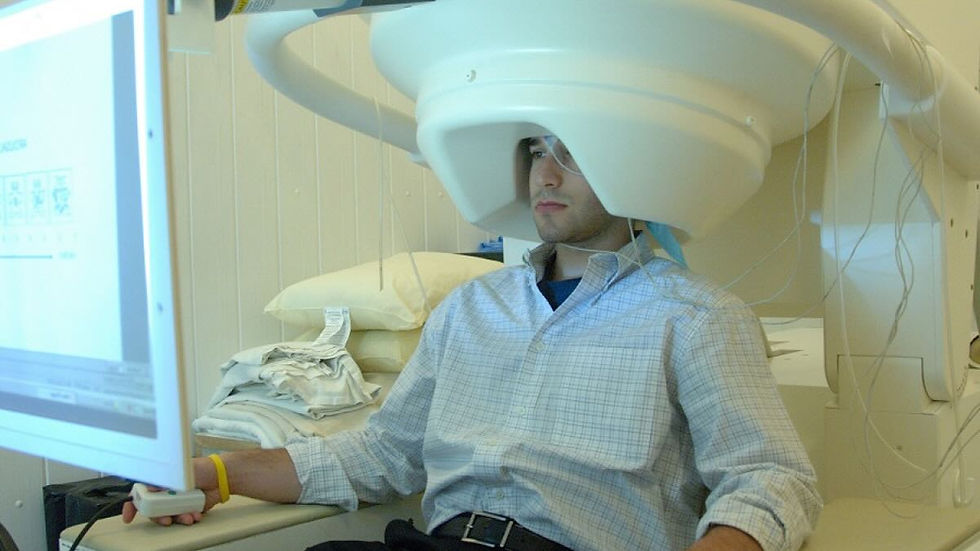
Finally, they used a technique called magnetoencephalography, which allows for the monitoring of brain electrical activity without the need to place electrodes inside the brain. By gathering all this information, scientists were able to look for changes occurring in different parts of the body.
The results revealed something interesting: although ketamine and psychedelics initially act in different ways, they appear to trigger similar changes in nerve cells and immune-related signals.
This is significant because it suggests that different drugs may ultimately converge on similar mechanisms within the brain. Rather than simply increasing or decreasing the level of a single brain substance, these treatments appear to set off a series of changes affecting communication between neurons and the brain's ability to adapt.
One of the most notable findings involved molecules produced by the immune system. Researchers found alterations primarily in signals related to interleukins 7 and 15, which play a role in communication between immune cells.
In individuals who responded best to ketamine, some of these signals differed prior to treatment and changed again afterward. This does not imply that depression is simply a disease caused by inflammation, nor that these molecules are solely responsible for the symptoms. However, the result suggests that the immune system may be part of the complex network of processes altered by rapid-acting antidepressants.
The researchers also observed a link between these immune signals and the brain's electrical activity. Before ketamine administration, specific immune system molecules were associated with the brain activity patterns observed in the participants. Following treatment, this relationship changed.

For scientists, this offers a clue that the immune system and brain circuits may be working in tandem during the antidepressant response. This finding could prove significant in the future; if specific biological markers help identify who is most likely to respond to treatment, it might be possible to develop more personalized therapies.
The study is far from suggesting that ketamine or psychedelics offer a definitive solution for depression. The findings themselves require confirmation through larger-scale research involving diverse patient groups.
The discovery’s significance lies elsewhere: it demonstrates that the impact of these treatments may extend far beyond merely altering neuronal communication. The brain, nerve cells, and the immune system appear to be engaged in a complex dialogue, and understanding this interaction could pave the way for new treatments for forms of depression that are currently difficult to manage.
READ MORE:
Convergent neuroimmune signaling underlying rapid antidepressant response to ketamine and psychedelics
Gregory H. Jones, Jessica R. Gilbert, Jenessa N. Johnston, Nirmala Akula, Anton Schulmann, Miranda Arakelian, Shiyong Peng, Peixiong Yuan, Ewurakua A. Winful, Mani Yavi, Brandi Quintanilla, Abdel Elkahloun, Ruin Moaddel, Ioline D. Henter, Dede Greenstein, Rodrigo Machado-Vieira, Christopher M. Bartley, Bashkim Kadriu, Moran Amit, Katy Rezvani, Mark D. Kvarta, Francis J. McMahon, and Carlos A. Zarate Jr.
Molecular Psychiatry. 28 July 2026
DOI:10.1038/s41380-026-03777-z
Abstract:
Despite distinct receptor targets, both ketamine and serotonergic psychedelics produce a rapid clinical response and share biological signatures that suggest convergence on common downstream molecular mediators. To identify shared biomarkers of rapid antidepressant response, this study integrated CSF proteomics from healthy volunteers (HVs) who received intravenous ketamine with transcriptomic analyses from induced pluripotent stem cells (iPSCs) derived from participants with treatment-resistant depression (TRD) and HVs; iPSCs were treated with ketamine, its metabolite (2 R,6 R)-hydroxynorketamine, lysergic acid diethylamide (LSD), or psilocybin. Multimodal clinical characterization (transcriptomics (n = 16 TRD; 11 HV), magnetoencephalography (MEG) (n = 30 TRD; 25 HV), and plasma cytokines (n = 39 TRD; 25 HV) were also performed on TRD and HV participants who received a single dose of intravenous ketamine (0.5 mg/kg) or placebo. Conserved immune pathways were identified across CSF and iPSC neurons with interleukin-15 (IL)-15 and monocyte chemoattractant protein-1 (MCP-1) emerging as key regulatory hubs. Transcriptomically, in whole blood, ketamine responders exhibited decreased IL-15 and elevated B-cell signaling pathways at baseline that were reversed post-treatment. At the protein level, plasma IL-7 levels (primary B-cell driver) correlated with baseline MEG gamma power, reaching brain-wide significance across all participants (main effect pFDR < 0.05). The association was most pronounced in the TRD participants across subcortical regions (diagnosis x IL-7 pFDR < 10-14). Post-ketamine, the TRD IL-7–gamma relationship inverted, paralleling widespread gamma power reductions throughout default-mode network regions (session x IL-7 pclc < 0.05). In mixed-effects models, cytokine ratios linked to IL-7/IL-15 signaling predicted antidepressant response (IL-4/interferon gamma (IFN-γ) pFDR < 0.041) and non-response (MCP-1/IL-7 pFDR < 0.009), suggesting that rebalancing within the IL-7/IL-15 axis may contribute to therapeutic efficacy. Clinicaltrials.gov identifier: NCT00088699; NCT02484456.


Comments