The War Ends On The Battlefield, But Continues In The Mind: The Silent Crisis Faced By Volunteers Who Fought In Ukraine

They survived the most intense fighting of the war in Ukraine, but many returned home facing another enemy: psychological trauma, guilt, anxiety, and difficulty accessing medical care. A new study reveals that these volunteer veterans may be being forgotten by healthcare systems.
Since the beginning of the war in Ukraine, thousands of foreigners have voluntarily traveled to fight alongside Ukrainian forces. Among them were many military veterans from the United States and the United Kingdom, men and women who had previously served in conflicts such as Iraq and Afghanistan.
However, unlike official military missions, these volunteers entered a very different war: a conflict marked by the intensive use of drones, artificial intelligence, constant attacks, and an extremely unstable environment, often without the training, medical support, and infrastructure offered by their home armies.
Researchers decided to investigate what happened to these veterans after they returned home. While much attention has been given to the military aspects of the war, little was known about how this experience affected the physical and mental health of the foreign volunteers.
The scientists' concern was that many of them were suffering in silence, without access to the health services intended for the military, since their participation in the conflict was voluntary and outside of official missions.
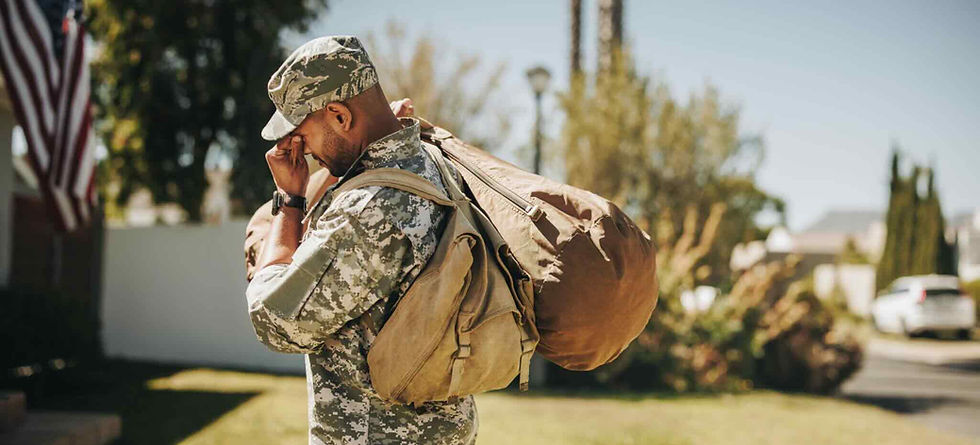
To answer this question, the team recruited 31 military veterans from the United States and the United Kingdom who had volunteered in Ukraine between October and December 2025. Participants answered widely used scientific questionnaires to assess symptoms of post-traumatic stress disorder, anxiety, depression, problematic alcohol use, quality of life, and a phenomenon known as moral injury.
In addition, 21 of these veterans also participated in open interviews, in which they could recount, in their own words, their experiences during the war, the difficulties they faced, and the challenges encountered when seeking medical care after their return.
The so-called moral injury deserves highlighting because it is different from post-traumatic stress disorder. While the latter usually arises after situations of extreme danger or threat to life, moral injury appears when a person witnesses or participates in events that deeply conflict with their ethical and moral values.
This can generate intense guilt, shame, a sense of failure, loss of purpose, and difficulty in rebuilding one's own identity, even long after the end of the conflict.

The results revealed a worrying scenario. Many veterans showed strong signs of post-traumatic stress disorder, symptoms of anxiety and depression, alcohol abuse, suffering related to moral injury, and a significantly reduced quality of life. In interviews, they described a war very different from that experienced in previous conflicts.
They reported constant drone attacks, trench warfare, a high number of physical injuries, and a permanent feeling of vulnerability. Many stated that the medical care available during the conflict was insufficient and that, upon returning to their countries, they encountered new difficulties in obtaining psychological or psychiatric treatment. Some said they were refused by veterans' support services themselves because they had not participated in an official military mission.
Faced with a lack of institutional assistance, many reported that their main emotional support became other veterans who had lived through similar experiences. The researchers warn that this reveals a significant gap in healthcare systems.

Although the study was small and does not allow generalizing the results to all war volunteers, it draws attention to a group that may be "invisible" to health services. According to the authors, as modern conflicts become increasingly technological and attract international volunteers, it will be necessary to develop specific ways of identifying, welcoming and treating these people, preventing them from carrying wounds for many years that do not show up in physical examinations, but which can be profoundly disabling.
READ MORE:
Volunteering for Ukraine: scoping the operational experiences and impacts among UK and US veterans
Victoria Williamson, Gavin M. Campbell, Nadav Liam Modlin, Walter Busuttil, Neil Greenberg, and Dominic Murphy
European Journal of Psychotraumatology. 17(1). 22 March 2026DOI: 10.1080/20008066.2026.2641410
Abstract:
Since the armed conflict in Ukraine escalated in 2022, UK and US military veterans have volunteered in substantial numbers to support the Ukrainian Armed Forces. They are operating in an exceptionally intense and technologically advanced environment, often exposed to high levels of combat. Little is known about the health impact of this voluntary service. We carried out a mixed-methods observational study of UK and US military veterans who self-reported travelling to Ukraine to support the Ukrainian Armed Forces. Participants were recruited between October and December 2025. Measures assessed probable post-traumatic stress disorder (PTSD), common mental health disorders (CMD), alcohol misuse, moral injury, and health-related quality of life. Open response items were used to qualitatively explore motivations for volunteering, experiences of service in Ukraine, and access to healthcare. Thirty-one UK and US military veterans completed psychometric measures and 21 provided qualitative data. High levels of probable PTSD, CMD alcohol misuse, and moral injury-related distress were identified, alongside low health-related quality of life. Veterans described extremely intense combat exposure, including drone warfare and trench fighting, and frequent physical injury. Physical healthcare was often described as poor or inadequate. Mental health care was widely sought but rarely accessible, both in Ukraine and after return home, with veterans reporting being turned away from support services. Consequently, emotional support primarily came from peers rather than formal care systems. This study provides early evidence on the experiences and health needs of UK and US veterans who volunteered in Ukraine, an under-researched group falling outside existing military care structures. Many report significant unmet mental and physical health needs and face barriers to care both in Ukraine and after returning home. Without targeted support, these veterans risk remaining invisible within health systems, highlighting the need for coordinated pathways and prioritised clinical care.



Comments