The Invisible Side of Human Decisions: Altruism, Betrayal, and Denial
- Apr 3
- 3 min read

Altruism, betrayal, and denial are not merely moral or religious choices; they are profound expressions of how the human brain works. They reveal how we are shaped by emotions, survival instincts, and the capacity for connection with others. Understanding these mechanisms does not diminish the value of these experiences but expands our awareness of what it means to be human: to live in constant balance between what we feel, think, and do.
Good Friday is a symbolic moment for Christians, presenting an intense narrative of suffering, faith, and extreme human relationships, which can be analyzed by neuroscience from three central pillars: altruism, betrayal, and denial.
Although these are spiritual and philosophical themes, neuroscience shows that these behaviors have real bases in the functioning of the brain. Understanding this helps us realize that our actions, even the most complex, are influenced by biological mechanisms linked to emotion, survival, and social relationships.
Altruism, primarily represented by Jesus in accepting suffering and even demonstrating compassion ("forgive them"), is associated with brain circuits linked to empathy and prosocial behavior. Regions such as the medial prefrontal cortex, the insula, and the anterior cingulate gyrus are activated when we feel empathy and put ourselves in another's shoes.

Furthermore, the reward system, involving dopamine, also plays a role, showing that helping others can generate an internal sense of purpose and meaning, even in the face of pain. This type of extreme altruism can also involve strong emotional regulation, controlling fear and pain through prefrontal areas.
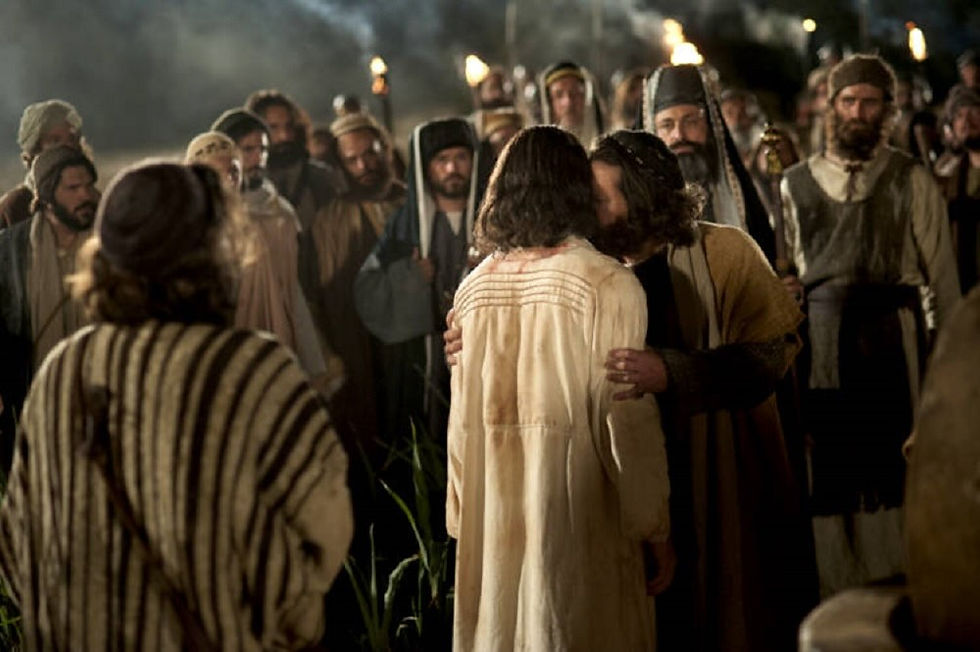
The betrayal experienced by Judas, however, involves an intense conflict between reward and guilt. Neuroscientifically, decisions to betray someone can activate the reward system (such as the ventral striatum), especially when there is immediate gain, in this case, the silver coins.
However, after the act, regions associated with guilt and emotional suffering come into play, such as the amygdala and the anterior cingulate cortex. This explains Judas' emotional collapse: the brain enters a state of dissonance, where the action performed conflicts with internal values, generating profound anguish, regret, and, in extreme cases, despair.
Denial, exemplified by Peter denying knowing Jesus out of fear, is a neurally based psychological defense mechanism. In threatening situations, the brain activates the amygdala, responsible for fear, and can temporarily "switch off" areas of the prefrontal cortex responsible for rational decisions consistent with personal values.
This leads to automatic self-protective responses. Denial, in this context, is not simply a conscious choice, but an attempt by the brain to avoid immediate danger, even if this generates subsequent guilt, as seen when Peter realizes what he has done.

Other characters also illustrate these processes. Pilate, for example, demonstrates moral conflict, possibly involving the dorsolateral prefrontal cortex, responsible for ethical decisions and weighing consequences. He recognizes the injustice but yields to social pressure, a phenomenon studied as social conformity, linked to brain networks of belonging and fear of rejection.
From an anatomical point of view, the story of Christ shows how the human brain is constantly strained between emotion and reason. The limbic system (emotions, fear, guilt) often conflicts with the prefrontal cortex (control, ethics, planning), especially in extreme situations.
This "internal struggle" is central to understanding complex human behaviors such as self-sacrifice, betrayal for self-interest, or denial out of fear.
In terms of clinical implications, experiences such as intense guilt, trauma, and emotional suffering can profoundly impact mental health.

Situations of betrayal and denial can lead to anxiety, depression, and post-traumatic stress, while altruism, when balanced, is associated with greater psychological well-being and a sense of purpose in life.
Altruism, betrayal, and denial are not merely moral or religious choices; they are profound expressions of how the human brain works. They reveal how we are shaped by emotions, survival instincts, and our capacity for connection with others. Understanding these mechanisms does not diminish the value of these experiences, but rather broadens our awareness of what it means to be human: to live in constant balance between what we feel, think, and do.
By Lidiane Garcia


Comments