The Invisible Price of American Football: Study Reveals Much Higher Risk of Neurodegenerative Diseases in Former Players
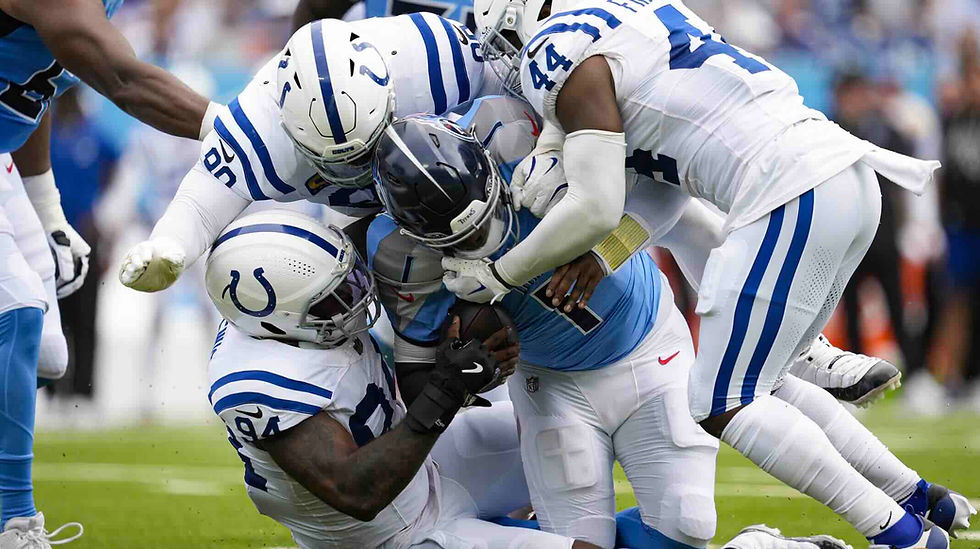
They were some of the strongest and most prepared athletes in the world. Even living longer than the general population, former players in the major American football league showed up to four times the risk of dying from neurodegenerative diseases. Understand how scientists reached this conclusion and why repeated blows to the head can leave marks decades later.
American football is one of the most popular sports in the world, but also one that exposes athletes to repeated impacts to the head the most. These blows don't always cause an obvious concussion. Often they are seemingly "normal" blows from the game, which happen hundreds or even thousands of times throughout an athlete's career.
In recent years, scientists have begun to suspect that this accumulation of small traumas could increase the risk of brain diseases in old age. Now, one of the largest studies ever conducted on the subject has brought even stronger evidence of this association.
To investigate this hypothesis, researchers gathered information from virtually every player who played in the major American football league in the United States between 1960 and 2019. In total, nearly twenty thousand athletes were followed for decades, accumulating more than half a million years of data when all participants are included.
Instead of interviewing family members or analyzing only famous cases, as occurred in many older studies, the scientists cross-referenced the players' official records with the United States national death database. This allowed them to identify the causes of death for each athlete much more precisely.

The researchers then compared this information with that of the general American population. To ensure a fair comparison, they considered important factors such as age, sex, race, and the historical period in which each person lived.
This is crucial because former athletes tend to be less obese, smoke less, engage in more physical activity, and therefore usually live longer than the average population. Without this adjustment, it would be difficult to know if a higher risk of neurological diseases was truly related to the impacts suffered during their careers.
In addition to this comparison, the team used highly sophisticated statistical models to answer an important question: did these players appear to have more neurodegenerative diseases simply because they died less from other causes, such as heart disease or cancer?
To test this possibility, the researchers created mathematical simulations that estimated how much this "survival effect" could influence the results. Even after discounting this advantage for athletes, the risk remained very high, making the conclusion much more reliable.

The results were quite striking. Although the former athletes had an overall mortality rate about 30% lower than the general population, they were almost four times more likely to die from neurodegenerative diseases.
These included different types of dementia, Parkinson's disease, and amyotrophic lateral sclerosis (ALS), a rare and progressive disease that affects the neurons responsible for movement. Even after all statistical corrections, the risk remained approximately three times higher than expected.
But why does this happen? The most accepted explanation is that the brain responds to repeated impacts with small lesions that accumulate over the years. These lesions can cause persistent inflammation, damage to the connections between neurons, and the accumulation of abnormal proteins, changes that also appear in diseases such as Alzheimer's and other forms of dementia. The problem is that these changes can remain silent for decades, only appearing many years after the end of a sports career.

The authors emphasize that the study does not mean that every player will develop a neurodegenerative disease. Many athletes will never experience these problems. However, the results show that repeated exposure to head impacts represents a significant risk factor that deserves attention.
The findings reinforce the need to improve helmets, modify rules to reduce collisions, improve the diagnosis of brain injuries, and monitor athletes throughout their lives. More than changing a sport, this knowledge can help protect millions of people repeatedly exposed to head impacts, including military personnel, professionals in certain fields, and those involved in contact sports.
READ MORE:
Neurodegenerative Mortality Among National Football League Players
Adam J. White, Ann C. McKee, Bobak Abdolmohammadi, Brenna Finegan, Charlotte B. Luster, Craig A. Rovito, Daniel H. Daneshvar, Eric J. Connors, Evan D. Feigel, Jesse Mez, Michael J. Mastrodicasa, Michael L. Alosco, Christopher J. Nowinski, and Ross D. Zafonte
eClinicalMedicine, 104051, July 08, 2026
DOI:10.1016/j.eclinm.2026.104051
Abstract:
Empirical research demonstrates elevated neurodegenerative mortality among individuals with repetitive head impact (RHI) exposure, including National Football League (NFL) players. This investigation addressed prior methodological limitations, including selection bias, subjective diagnoses, and retrospective reporting, by analyzing the relationship between RHI exposure and neurodegenerative mortality in a fully enumerated, 5.8-fold larger cohort of NFL players. A population-based retrospective cohort study was conducted comprising all current and former NFL athletes who debuted between 1960 and 2019 and played at least one regular or postseason NFL game, with National Death Index records (1979-2023) matched to Sports Reference, LLC data. Standardized mortality ratios (SMRs) were calculated from National Institute for Occupational Safety and Health data compared to an age-, sex-, race-, and calendar-year-standardized general population. Sensitivity analysis assessed whether the observed excess neurodegenerative mortality could be attributed to competing risks using a cause-specific hazard simulation. A total of 19,824 athletes had a cumulative 518,833 person-years (mean = 26.2 years, SD = 16.2), with 1994 decedents. NFL players exhibited lower all-cause mortality (SMR = 0.70; 95% CI: 0.67-0.74) but higher neurodegenerative mortality (SMR = 3.94; 95% CI: 3.38-4.56), including amyotrophic lateral sclerosis (SMR = 4.55; 95% CI = 3.13-6.38), all-cause dementia (SMR = 3.80; 95% CI = 3.11-4.60), and Parkinson's disease (SMR = 3.88; 95% CI: 2.76-5.30). Cause-specific hazard simulation indicated that competing risks alone would inflate the expected NDD SMR by a factor of 1.30, yielding a residual neurodegenerative SMR of 3.04 (95% CI: 2.63-3.50). Neurodegenerative mortality was nearly four times higher in NFL players compared to the general population and remained threefold higher after accounting for competing risks. Together, these findings strengthen the evidence for RHI exposure-related neurodegenerative mortality in NFL players that cannot be explained by differential survivorship. The National Institute of Neurological Disorders and Stroke [U54NS115266; U01NS086659], the National Institute on Aging [P30AG13846; P30AG072978], and the Maloney/Carpenter Trauma-Related Neurodegenerative Disease Research Fund.



Comments