Testosterone May Protect Against Aggressive Brain Tumors, New Study Reveals

Testosterone has always been seen as a possible ally against cancer. But a new discovery has surprised scientists: in the brain, it may help to curb one of the deadliest tumors in existence.
Glioblastoma is one of the most aggressive and lethal types of brain cancer. Even with surgery, radiotherapy, and chemotherapy, most patients face a difficult prognosis.
For many years, scientists have observed that men develop this tumor more frequently and tend to have worse outcomes than women. Therefore, researchers began investigating whether sex hormones, such as testosterone, could influence the growth of cancer in the brain.
For a long time, it was believed that androgens, a group of hormones that includes testosterone, helped cancer grow. Previous studies showed that these hormones could stimulate the multiplication of tumor cells in the laboratory.
Based on this, some scientists even suggested that blocking testosterone could be a treatment strategy for brain tumors. However, new research has just revealed that the situation may be much more complex than previously thought.
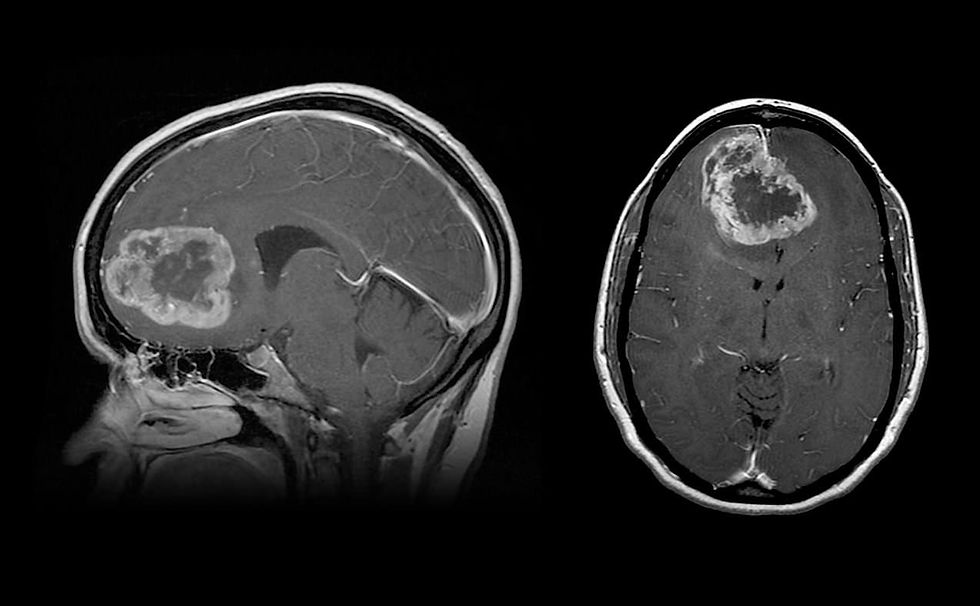
Glioblastoma
To investigate this relationship, researchers used experimental mouse models of glioblastoma. Some of the animals had drastically reduced androgen levels, while others maintained normal hormone levels.
The scientists then carefully monitored tumor growth, analyzed the functioning of the immune system, and studied inflammatory changes in the brain. In addition, they also examined clinical data from human patients with glioblastoma to verify if the effects observed in the animals appeared similarly in people.

The results surprised the researchers. In brain tumors, the reduction of androgens accelerated cancer growth. In tumors located outside the brain, the opposite occurred: the hormonal decrease slowed the progression of the disease.
This suggests that the brain has a very particular biological environment, where testosterone may play an unexpected protective role. In male patients with glioblastoma, scientists also observed that testosterone treatment was associated with a lower risk of death.
To understand why this happens, the researchers investigated the immune system. They discovered that the loss of testosterone triggered an intense inflammatory response in the brain.
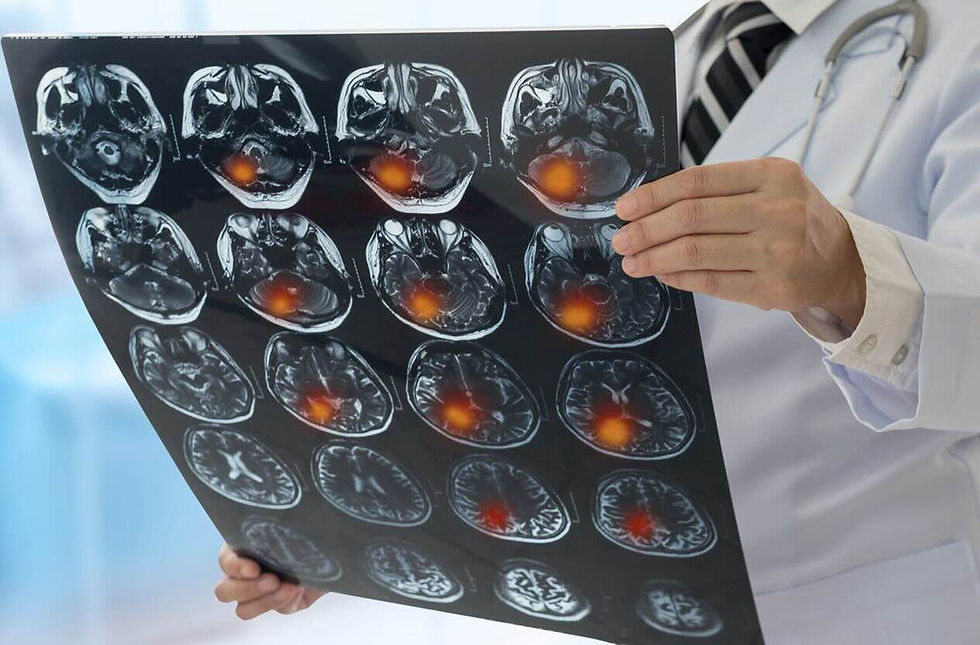
This inflammation activated regions of the body responsible for releasing stress-related hormones, increasing substances that weaken the body's defense cells. As a consequence, the environment around the tumor became more favorable to cancer growth and less efficient in fighting tumor cells.
The authors state that the study challenges old ideas about the role of testosterone in brain cancer. Instead of simply stimulating the tumor, androgens appear to help control specific inflammatory and immunological processes in the brain. Although further studies are still needed before any changes in patient treatment, the discovery paves the way for more personalized approaches and shows that sex hormones can have very different effects depending on the organ affected by cancer.
READ MORE:
Androgen loss accelerates brain tumour growth via HPA axis activation
Juyeun Lee, Yoon-Mi Chung, Daniel J. Silver, Yue Hao, Dylan Scott Lykke Harwood, Alyssa Ealy, Amanda M. Serapiglia, Lee Curtin, Julia R. Benedetti, Christine Ann Pittman Ballard, Kamya Lapsley, Andrea Alvarez-Vazquez, Jessica Goldberg, Cathy Li, Sehaj Kaur, Rian Neal, Sabrina Z. Wang, Kristen E. Kay, Josephine Volovetz, Ellen S. Hong, R’ay Fodor, Jakub Jarmula, Michael Nicosia, Joshua B. Rubin, Kristin R. Swanson, Quinn T. Ostrom, Nikhil Panicker, Bjarne Winther Kristensen, Michael Berens, Nima Sharifi, and Justin D. Lathia
Nature, 6 May 2026
DOI: 10.1038/s41586-026-10451-5
Abstract:
Many cancers, including glioblastoma (GBM), show a male-biased incidence and associated worse outcomes1. The mechanisms that underlie this sex difference remain unclear but may involve an immune response2 that is partly driven by sex hormones such as androgens. Such hormones are thought to suppress antitumour T cell immunity and to promote tumour progression3,4. However, here we report a previously unreported tumour-suppressive role for androgens in brain tumours. Using mouse models, we demonstrate that androgen loss via castration accelerates intracranial tumour growth, whereas the opposite effect (delayed tumour growth) is observed in extracranial tumours. Similar effects were observed in male patients with GBM, in whom testosterone treatment significantly reduced the risk of death. In male mice with GBM tumours, castration-induced systemic T cell dysfunction driven by increased levels of serum glucocorticoids, which act on myeloid cells to promote an immunosuppressive tumour microenvironment. Mechanistically, hyperactivation of the hypothalamus-pituitary-adrenal axis in castrated mice with GBM is driven by increased neuroinflammatory signalling through IL-1β and TNF. Spatial transcriptomic analysis further revealed that androgen loss enhances inflammasome activation in microglia, which promotes this neuroinflammatory state. Together, our findings demonstrate that brain tumours drive distinct neuroinflammatory and neuroendocrine pathways in the androgen-deprived setting and highlight organ-specific regulation of antitumour immunity.


Comments