Caffeine-Free, Sugar-Free: Sparkling Water Can Help the Brain Resist Mental Fatigue in Gamers

Researchers investigated whether sparkling water could reduce mental fatigue during long video game sessions. Fifteen gamers participated in two three-hour sessions playing virtual soccer, drinking sparkling water in one session and still water in the other. Sparkling water reduced feelings of tiredness, maintained attention span, and prevented physiological signs of fatigue, such as pupil constriction. The effects occurred without changes in blood sugar levels or stress hormones, suggesting that the drink may help keep the brain alert without the risks associated with caffeine or sugar.
Mental fatigue is a common problem in modern life. Many daily activities require prolonged concentration, such as working in front of a computer, driving for long periods, or playing competitive video games. Over time, the brain begins to show signs of fatigue, which can reduce the ability to pay attention, make decisions, and react quickly.
Interestingly, this type of fatigue is not always immediately perceived by the person. In some cases, cognitive performance is already declining before the conscious feeling of tiredness even arises.
Electronic sports, known as eSports, are a good example of an activity that demands great mental effort. Unlike traditional sports, which rely heavily on physical fitness, eSports require constant attention, quick thinking, memory, visual coordination, and the ability to quickly switch between different tasks.

Previous research has shown that playing competitive video games for about three hours can reduce the speed and accuracy of thinking, as well as cause changes in physiological indicators of the brain, such as changes in pupil diameter. These signs indicate that the brain is becoming mentally fatigued.
To cope with this mental fatigue, many gamers resort to stimulant drinks, such as coffee or energy drinks. These drinks contain caffeine and sugar, substances that can temporarily increase alertness and improve performance in mental tasks.
However, frequent consumption of these substances can have negative health effects, including changes in heart rate, sleep problems, difficulties in controlling blood glucose, and even an impact on mood. Therefore, researchers have begun to look for safer alternatives to help keep the brain alert during prolonged activities.
One interesting possibility is sparkling water. Unlike energy drinks, it contains neither sugar nor caffeine. Previous studies suggest that carbonated beverages can improve mood, increase motivation, and reduce feelings of drowsiness. Furthermore, the sensation caused by the bubbles themselves can stimulate sensory receptors in the mouth and throat, which could influence areas of the brain related to alertness.
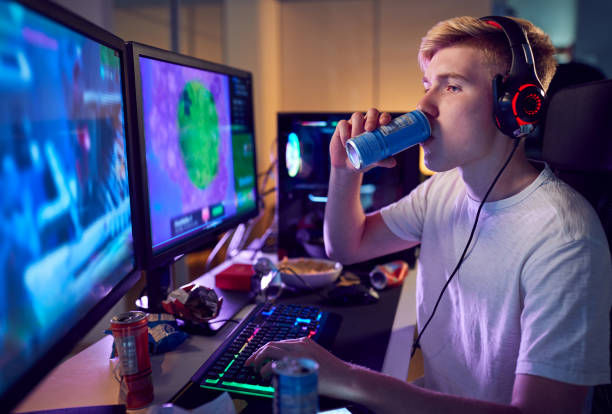
The mechanism proposed by the scientists involves the carbon dioxide present in sparkling water. When we drink this water, the gas dissolves and activates natural sensors present in the tissues of the mouth and throat. These sensors are responsible for detecting sensations such as temperature, burning, or tingling.
The activation of these receptors sends nerve signals to deep regions of the brain that help regulate alertness and attention. These regions also connect to the prefrontal cortex, an area fundamental for thought control, decision-making, and concentration.
To investigate whether sparkling water could actually help reduce mental fatigue during video games, the researchers conducted a controlled experiment. Fifteen young adults who regularly played video games participated in the study. Each participant performed two gaming sessions on different days.
In one session, they drank sparkling water while playing. In the other, they drank still water. This type of experimental design allows for a direct comparison of the effects of carbonation, without the influence of caffeine or sugar.
During each session, the volunteers played a virtual soccer game for three hours. Scientists measured several indicators before the start of the game and every hour during the match. These included the level of fatigue reported by the players, how much they were enjoying themselves, and simple tests of attention and mental control.
In addition, sensors continuously monitored pupil diameter and heart rate. Saliva and blood samples were also collected to measure levels of cortisol, a hormone linked to stress, and glucose, related to energy in the body.

The results showed interesting differences between the two conditions. When players drank sparkling water, they reported less fatigue and greater enjoyment during the game. Cognitive tests indicated that attention span and mental control were preserved for longer.
Another finding was that pupil diameter, which normally decreases when the brain is fatigued, remained more stable during the sparkling water sessions. At the same time, there were no changes in blood glucose levels, stress hormones, or heart rate, suggesting that the effect occurred without significant metabolic alterations.
Furthermore, players committed fewer fouls during the game when consuming sparkling water, although overall offensive and defensive performance remained similar. This suggests that the beverage may help maintain behavioral control during long periods of mental activity. Overall, the results indicate that sparkling water may be a simple and safe strategy to reduce signs of cognitive fatigue during prolonged digital activities.
READ MORE:
Sparkling water consumption mitigates cognitive fatigue during prolonged esports play
Shion Takahashi, Wataru Kosugi, Seiichi Mizuno, and Takashi Matsui
Computers in Human Behavior Reports. Volume 21, March 2026, 100943
DOI:10.1016/j.chbr.2026.100943
Abstract:
Prolonged esports play induces cognitive fatigue, characterized by diminished executive function with pupil constriction. Players often rely on caffeinated or sugary drinks to combat fatigue, but regular use poses health risks. Sparkling water, a sugar- and caffeine-free beverage, stimulates brainstem and prefrontal activity via sensory pathways potentially mediated by transient receptor potential (TRP) channels in the throat. This study tested the hypothesis that sparkling water mitigates cognitive fatigue during prolonged esports play. Fifteen young adult players participated in a randomized crossover trial, each completing two 3-h sessions of a virtual football game while consuming either sparkling water or plain water. Subjective fatigue, enjoyment, and executive function (via a flanker task) were measured at baseline and hourly, while pupil diameter and heart rate were monitored continuously. Blood glucose and salivary cortisol were assessed periodically. Compared to plain water, sparkling water significantly attenuated increases in subjective fatigue, enhanced enjoyment, and preserved executive function, along with preventing pupil constriction. Heart rate, blood glucose, and salivary cortisol levels did not differ between conditions. Notably, players committed fewer in-game fouls with sparkling water, while offensive and defensive performance remained unchanged. These findings demonstrate that sparkling water contribute to alleviate both subjective and objective signs of cognitive fatigue during prolonged esports play, consistent with our hypothesis. This non-caffeinated intervention may help sustain inhibitory control and promote fair behavior, offering a safe and sustainable strategy for managing mental fatigue in modern life.


Comments